Key Takeaways:
- Thoughtful site management saves money and prevents long-term issues. Proper building placement, traffic flow, drainage, and utility planning are essential to avoid costly redesigns and safety risks.
- Don’t prioritize “cheap” over “right.” A realistic budget and early planning help ensure your facility supports operations, employee comfort, and long-term value.
- Employee-focused amenities matter more than ever. Features like air conditioning, natural lighting, and modern break spaces improve retention, productivity, and overall workplace satisfaction.
- Design choices today impact your ability to grow tomorrow. Planning for future expansions, flexible layouts, and scalable infrastructure prevents duplicated costs and operational disruptions.
- Partnering with an experienced contractor reduces risk. A.C.E. Building Service offers decades of expertise in manufacturing facility design, from site planning to future-ready building strategies.
But there are a few corners you should absolutely not cut, no matter how tempting it may be. These choices directly impact your people, productivity, future growth, and, yes, even your long-term budget.
Below are the six design decisions that deserve a little extra thought (and why skipping them to save a few dollars now often leads to headaches - and a lot of wasted money - later).
The 6 Manufacturing Design Decisions That Are Worth Doing Right
1. Site Management — The “Don’t Wing This One” Corner
Site management is all about how everything moves on your property: trucks, employees, visitors, materials, equipment—you name it. Right after deciding how much square footage you need, this is the most important design step.
You’ve probably had that moment backing out of a parking stall, thinking “Wow, this feels tighter and more awkward than it should.” That’s what happens when someone cuts a corner in site planning.
What to Think Through
Before you even start sketching floor plans, these are the kinds of questions that absolutely must be considered and answered. They shape everything that comes next and can make the difference between a smooth, efficient site and one that constantly works against you.
- Where the building should sit on the site — The position of your facility affects future expansion, parking, access roads, and even how sunlight hits the building.
- How cars, trucks, and people move safely and efficiently — Efficient traffic flow reduces bottlenecks, improves safety, and keeps operations running without unnecessary interruptions.
- Where to put loading docks — The right placement supports material flow, shipping/receiving efficiency, and overall production speed.
- How water is going to drain (trust us—this matters more than you think) — Drainage problems don’t just cause headaches, they create long-term maintenance issues, safety hazards, and costly site failures.
- Where the potential barriers are (easements, wetlands, utilities) — These hidden factors can limit placement, add unexpected costs, or change your entire site plan if discovered too late.
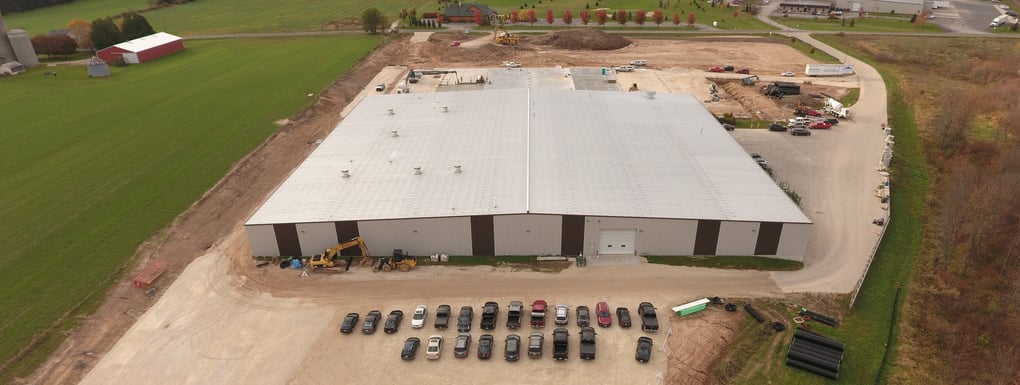
The site should be designed efficiently; otherwise, significant money can be wasted. On average, the following site work can account for 5 - 15% of a project’s total cost.
- Excavation
- Building utilities
- Asphalt paving
- Stormwater management
- Landscaping
What Can Go Wrong?
Besides the potentially wasted money from inefficient design, the biggest complication is the effects that snowball from a poorly designed site. This includes water that doesn’t drain properly (endless problems in your future) or a traffic flow pattern that puts employee safety at risk.
How Can A.C.E. Building Service Help?
We offer a broad range of in-house surveying and land development services to Northeastern Wisconsin. We provide professional, accurate, client-focused land surveying services of the highest quality to our clients. We can handle the site design ourselves or lead the design effort with a trusted civil engineering partner.
Get the insights you need to effectively plan your construction schedule.
2. Getting It Right vs. Getting It Cheap — A Friendly Reality Check
Yes, you need to be mindful of budget. Everyone does. But starting with the lowest possible number is basically saying, “Let’s build the cheapest thing we can, no matter what.” And we know that’s not anyone’s real goal. You want a building that works, that lasts, and that your employees are comfortable in. And you absolutely deserve that.
Ask Yourself
- What’s going inside the building?
- What can’t you compromise on?
- How are you supporting employee comfort and safety?
- Are you planning a realistic budget that sets you up for success?
Have a realistic budget established early. It’s easy to fall into the trap of having a champagne taste on a beer budget. Being in tune with a solid budget early will allow you to plan accordingly with capital planning and early discussions with lenders.
What Can Go Wrong?
Saving a lot of money now can cost you a lot of money later. If you don’t get it right the first time, you may end up redesigning or rebuilding—and that wastes time, money, and opportunities. The sooner you get the project constructed correctly, the sooner you can start producing, fulfilling orders, and growing.
How Can A.C.E. Building Service Help?
Our preconstruction process always starts with a feasibility budget that helps you see what’s viable early on. No guessing. No wishful thinking. Just a clear path forward.
Need a new building but worried about your budget? Learn more about build-to-lease options.
Don’t Cut These Corners If You Want Happy, Productive Employees
In the name of employee retention, in today's world, companies that are most successful in attracting employees are those that provide amenities that other companies don’t.
We’re not saying your facility has to look like Google’s headquarters; let’s just start with some basics, such as air conditioning inside manufacturing facilities. Years ago, that wasn't heard of. However, it is now a strongly considered amenity to attract and retain employees.
3. Air Conditioning — Not a “Nice-to-Have” Anymore
Developers and building project managers have to ask themselves the right questions in today’s ultra-competitive work environment, such as, “How much more productive will an employee be if they are comfortable in their conditions?” Equally important as it is to ask the right questions is to find the answers and follow through with them.
As such, air conditioning is now a standard amenity in many modern-day manufacturing facilities, so if you cut this corner in the name of budget, you may have a harder time finding the labor you need or keeping employees around.
What Can Go Wrong?
- Without A/C, expect:
- Tired employees
- Higher error rates
- Lower productivity
- Workers leaving for employers who do offer climate control
How Can A.C.E. Building Service Help?
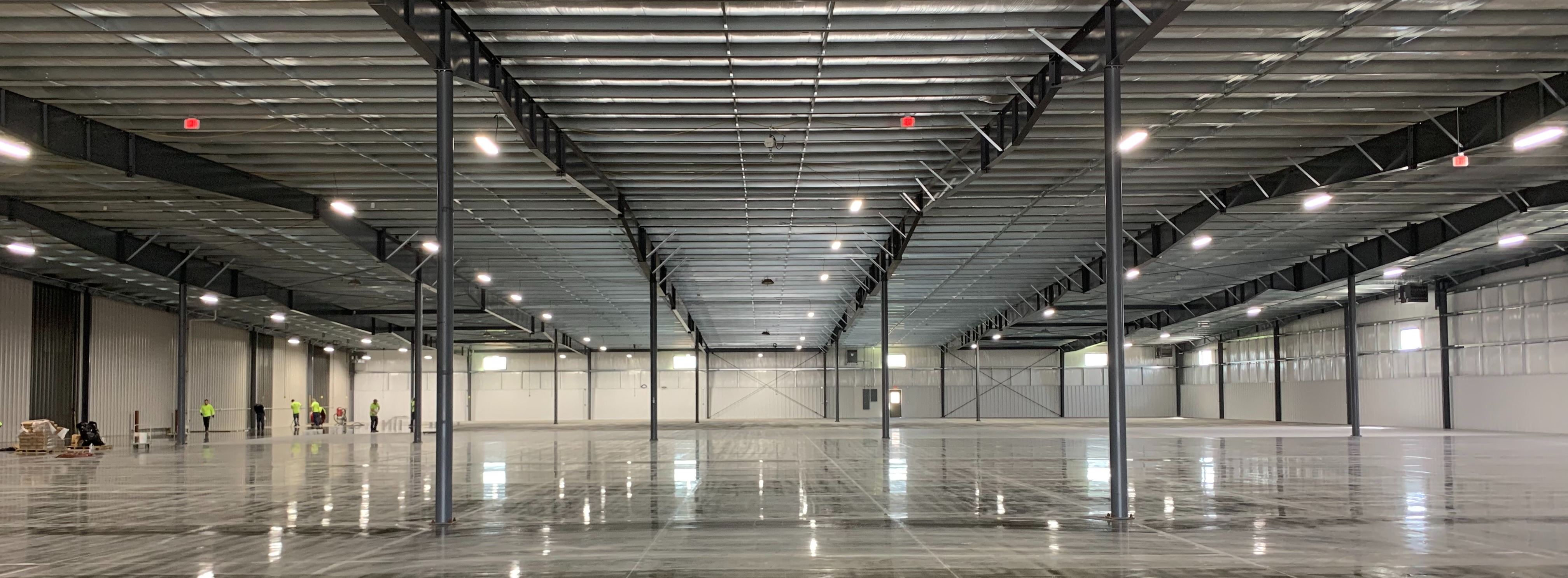
We provide efficient designs for buildings to work in conjunction with climate-controlled environments. Designs such as the placement and location of windows that allow natural light but deny solar heat gain. Efficient building envelope design, such as eliminating thermal short-circuits, insulating to better than code minimum, and using an efficient structural design to work in tandem with HVAC equipment placement and eliminate otherwise unnecessary structural support.
We’re proud of our design-build process here at A.C.E., and we encourage you to check out our design-build service page to learn a little more about us!
4. Natural Lighting — The “Feels Better Because It Is Better” Corner
Natural light used to be standard in industrial buildings. Then energy codes changed, windows shrank, and people got stuck working in giant metal boxes. Thankfully, modern technology lets you have energy efficiency and natural light. And your employees will thank you.
What Can Go Wrong?
This question should actually be, “What can go right?” Studies show that people are more efficient, have better attitudes, and are overall happier working in environments with natural lighting or views to the outdoors compared to those working in environments without.
So what comes from happier, more efficient employees within your naturally-lit facility? More productivity from less fatigue and, not to mention, less turnover.
How Can A.C.E. Building Service Help?
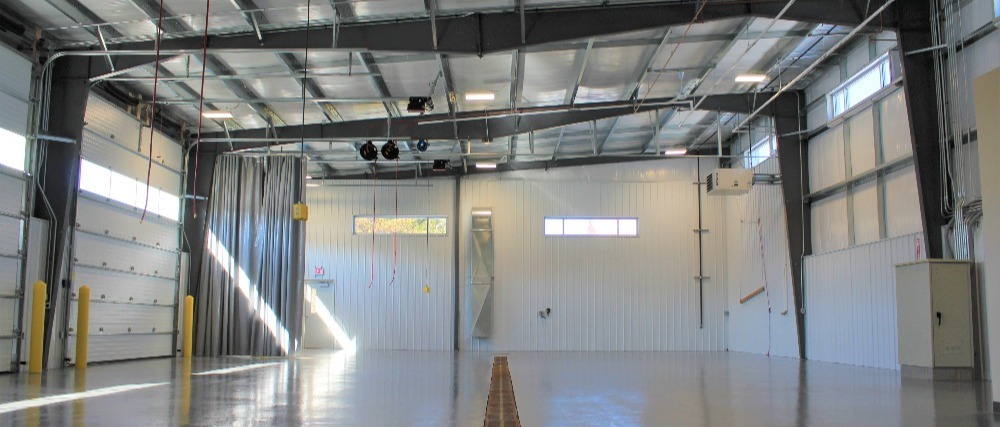
We can integrate elements such as windows, light tubes, skylights, or other daylighting measures into the building’s overall design. For example, Butler Manufacturing, our partner in pre-engineered metal materials, offers a skylight system that integrates directly with the MR-24 standing seam roof, ensuring that the skylights won’t become a future maintenance issue.
How much will my metal building cost? Here’s everything you should consider.
A.C.E. Building Service has been helping manufacturers across Northeast Wisconsin plan smarter, build better, and grow with confidence since 1963. Learn more about our history.
5. Employee Enrichment Areas — A Small Thing That Makes a Big Difference
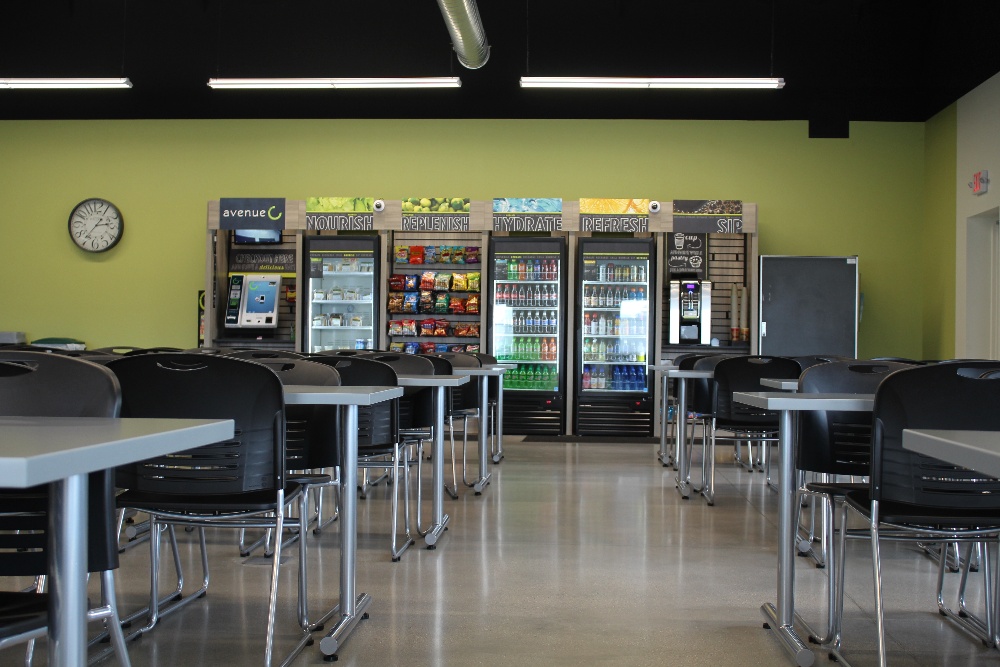
Break rooms aren’t just “nice touches.” They genuinely improve the employee experience. Whether traditional or modern, these spaces should help employees reset and recharge.
These spaces can be traditional or contemporary - whatever vibes with your organization’s culture. However, if at all possible, the designs of these spaces should incorporate natural light, windows, and access to conveniences such as Wi-Fi, device charging stations, or even fitness areas.
What Can Go Wrong?
Again, the same concept as above; what you could be asking is, “What can go right?” Offering more or better amenities can better position a company to attract and retain talent and deliver a better overall work environment for your employees.
How Can A.C.E. Building Service Help?
We’ve created countless employee spaces and know how to design them efficiently without breaking the budget. Check out our past industrial and manufacturing projects here!
Want to start designing your manufacturing facility, and not sure where to start? Check out our design gallery for inspiration!
Don’t Cut Corners on Your Future Growth Either
As crucial as it is for your project to be designed for today’s needs, you should also keep the future top of mind. Designing a space for anticipated growth can eliminate wasted construction dollars down the road for the rework or redesign of areas.
6. Design for the Future — Because No One Wants to Pay Twice
 Designing for today’s needs is important. Designing for tomorrow’s needs is crucial. A building that’s easy to expand or adapt can save tens (or hundreds) of thousands later.
What Should You Plan For?
- Future additions
- Technology upgrades
- Flexible interior layouts
- Adequate electrical and plumbing capacity
- Efficient material flow
- Long-term operational cost savings
What Can Go Wrong?
The following can all go wrong if you don’t plan for your future growth or expansion:
- Extra costs, for starters. You may end up spending more money per square ft. if you need to expand without having the capacity for future growth already built into the design. For example, the cost of a 20,000 square ft. building today will be far less than the total of a 15,000 square ft. building today and adding on 5,000 square ft. in two years.
- Fixed costs such as permitting, site work, mobilization, engineering, and architectural fees, and project management, are in effect duplicated by having two or more projects that could have been constructed with just one.
- Loss of ROI. Suppose you incorporate materials nearing the end of their relevance when new materials or technology are available but only slightly more expensive. In that case, this may hurt you financially in the future. This was seen in previous years when LED lighting was gaining popularity. People that chose high-efficiency fluorescent lighting found themselves upgrading to LED in a matter of only a few years because they could save significant operating expenses with lower utility bills.
How Can A.C.E. Building Service Help?
We keep up-to-date on building trends and design ideas through webinars, design literature, product innovations, and strategic partnerships with design professionals and building trade professionals.
Our partnership with Butler Manufacturing keeps us at the forefront of innovation in pre-engineered metal building and systems construction. Butler is the industry leader in developing new products and offerings through systems construction.
Check out this blog post to learn about the future of industrial and manufacturing buildings.
Not Sure Where to Start? A.C.E. Is Here to Help
Designing a manufacturing facility is a big undertaking, whether you’re building new, planning a major expansion, or updating an older industrial space. You deserve a partner who listens carefully, asks the right questions, and puts your goals first.
At A.C.E. Building Service, businesses across Manitowoc, Green Bay, Sheboygan, and the greater Northeast Wisconsin region trust us because we prioritize integrity, honesty, responsiveness, and clear communication—every time. It’s why companies continue to choose us as their preferred commercial contractor and long-term building partner.
If you're ready to talk through your project, we’re here to help. Give us a call or reach out online. We’d love to help you design a manufacturing space that supports your people today and positions your facility for future growth.